
BRIDGING
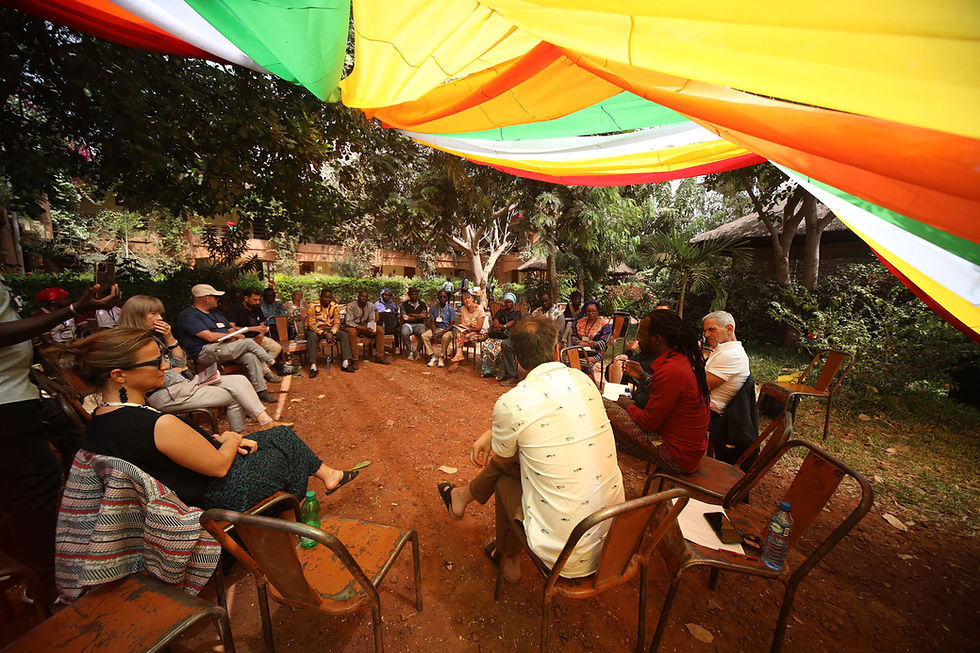
The Bridging project builds on more than eight years of transnational collaboration at the intersection of art, culture, and community-based practice across Europe and Africa. Its conceptual framework emerges from insights gained through the previous project SHARE; Creative Powers of Art, which connected twelve partner organizations, over sixty artists, and multiple local communities, demonstrating the role of art as a tool for social cohesion, knowledge production, and empowerment.
Bridging was submitted to the Creative Europe programme as a medium-scale cooperation project for the period 2026–2029. Although the project was not selected for funding in this application round, its activities and partnerships are already being developed incrementally through pilot actions, residencies, collaborations, and productions. The project remains in active development and is planned to be resubmitted to Creative Europe in a future call, positioning Bridging as a long-term process rather than a single funding-dependent initiative.
The project focuses on transcontinental artistic collaboration, co-creation, and circulation of artistic work; research into cultural heritage; capacity-building for artists and cultural practitioners; and the development of digital and sustainable practices. Particular emphasis is placed on residency programmes, feminist and decolonial research approaches, participatory learning, and the connection between local knowledge systems and global artistic networks. The consortium brings together European partners working closely with African organizations and grassroots actors, enabling multi-directional mobility and exchange that moves beyond a unidirectional Europe–Africa framework.
Addressing key priorities such as digital transformation, environmental sustainability, youth engagement, and gender equality, Bridging understands art as a space of knowledge production, political imagination, and alternative institutional models. Its objective is not only the production of artworks, but the long-term building of relationships, shared knowledge, and cultural infrastructure that support more just, horizontal, and reciprocal forms of international cultural cooperation.